
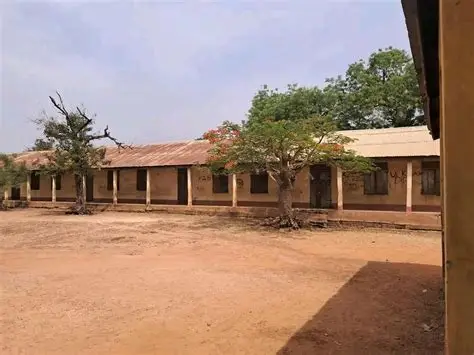
After months of uncertainty, the over 70 years old Tendamba Basic School in Wa, the capital of the Upper West Region has been pulled down to make way for the controversial 24-Hour market in that area.
For weeks, landowners otherwise known as the Tendana of Wa battled officials of the Wa Municipal Assembly over their decision to pull down the school to pave way for the implementation of government’s flagship policy. Despite the matter going to court, the assembly finally prevailed leading to the demolition of the school.
The Tendamba Basic school situated near two major markets in the municipality is the alma-mata of Supreme Court Justice, Yoni Kulendi and other prominent people in the area.
In the heat of the fight between the landowners and the assembly, Justice Kulendi visited the school and appealed for the reversal of the decision to pull it down, but it appears his plea fell on deaf ears as earth moving machines authorized by the assembly pulled down the structures on Saturday, 13th June 2026.
The demolition now paves way for the constrcution of the 24-Hour market which is part of the government’s policy to stimulate trading beyond normal hours.
Landlords oppose planned demolition of school for 24-Hour market
The Landlords of Wa Sokpayiri, owners of the land on which the Tendamba Primary and Kindergarten schools are situated, in February strongly opposed plans to demolish, relocate or convert the schools into a proposed 24-hour economy market, citing a lack of consultation, educational disruption and the loss of cultural heritage.
The landlords said they were completely sidelined from discussions about the demolition or conversion of a school that predates Ghana’s independence and bears their name.
Addressing the media in Wa, Ibrahim Abu Sunkari Tindaana, who read the speech on behalf of the Landlords of Sokpayiri, said the landowners, who are key stakeholders, were never consulted before the decision to redevelop the school land into a market.
Mr Tindaana clarified that the landlords were not opposed to government policies aimed at boosting economic activity and expanding market infrastructure, but expressed concern about the choice of location.
He said the Tendamba school land was acquired by the colonial government strictly for educational purposes and has remained vested in the state for that same use.
Source:tolonradio.com