
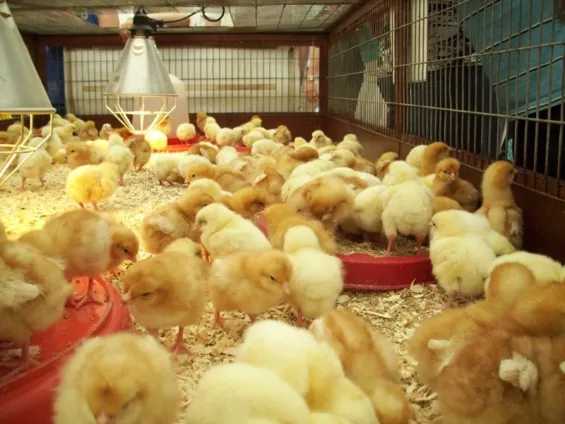
The government’s Akoko Nkitinkiti Initiative has received a major boost following the distribution of 10,000 poultry birds to vulnerable households in the Central Gonja District of the Savannah Region, with support from the Food and Agriculture Organization (FAO).
The intervention, which marks the second phase of the programme in the district, is aimed at improving household nutrition, strengthening livelihoods and creating sustainable income-generating opportunities for beneficiaries.
The distribution includes 10,000 poultry birds, alongside initial feed support, to help beneficiaries establish and manage their poultry businesses.
Speaking at the ceremony, the Member of Parliament for Yapei-Kusawgu, John Abdullah Jinapor, underscored the importance of supporting farmers and strengthening agricultural livelihoods, describing the initiative as a significant intervention to improve household economic conditions.
A representative of the FAO, Clement Naabeh, said the organisation was implementing complementary food security, climate resilience and livelihood programmes across the five northern regions.
He said the interventions include irrigation support, livestock development, climate-smart agriculture, improved storage facilities and the provision of processing equipment to minimise post-harvest losses.
Meanwhile, the Savannah Regional Director of Agriculture, Sulemana Seidu, stressed the need for proper training and effective management to ensure the success of the poultry initiative.
He explained that beneficiaries who demonstrate the capacity to manage and expand their poultry businesses could be registered as small- and medium-scale poultry farmers to enable them to access additional agricultural support.
The first phase of the intervention benefited approximately 216 people in the Central Gonja District. The second phase is expected to reach more than 200 additional households, bringing the total number of beneficiaries under the initiative in the district to over 400.
The programme forms part of broader efforts to strengthen local poultry production, enhance food security and improve the economic resilience of vulnerable households.